
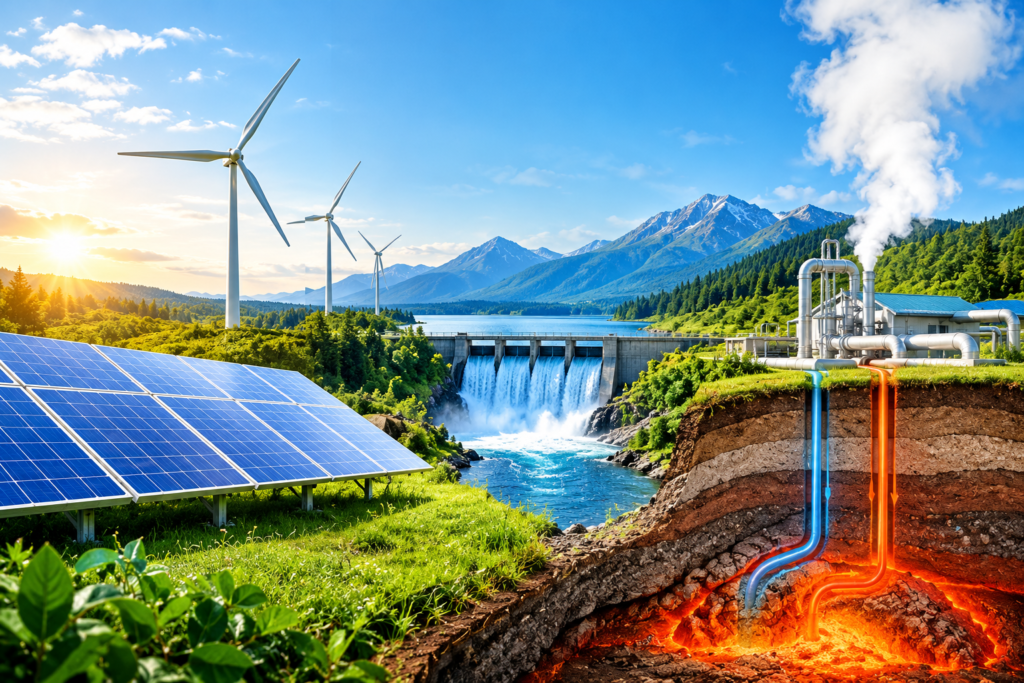
Renewable energy is becoming an important part of the global transition toward cleaner and more sustainable power. As countries look for alternatives to coal, oil, and natural gas, renewable energy sources such as sunlight, wind, flowing water, and heat from beneath the Earth’s surface are receiving increasing attention.
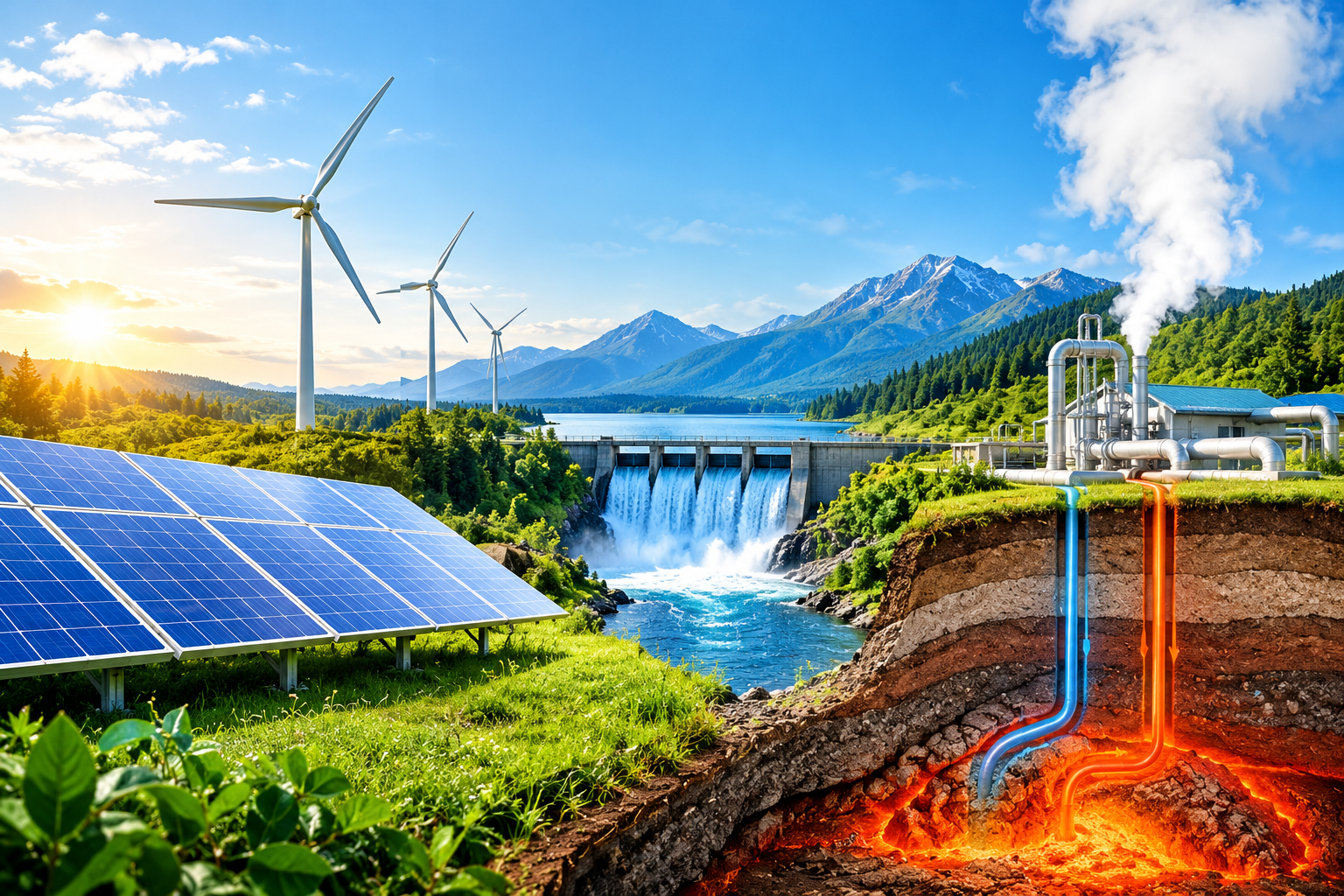
But what is renewable energy, what are its main types, and how does geothermal energy fit into the picture?
In this guide, you will learn about the different types of renewable energy, their advantages and disadvantages, practical applications, and the role of geothermal energy in the future of sustainable power.
What Is Renewable Energy?
Renewable energy is energy obtained from natural sources that are replenished over time. These resources include sunlight, wind, moving water, organic materials, and heat from inside the Earth.
Unlike fossil fuels, which take millions of years to form, renewable resources are naturally replenished. However, their availability depends on factors such as weather, location, resource management, and technology.
According to the U.S. Energy Information Administration, the major renewable energy sources include solar, wind, hydropower, biomass, and geothermal energy.
Renewable energy can be used to generate electricity, heat buildings, provide hot water, and support certain industrial and transportation applications.
Types of Renewable Energy
There are five widely recognized major types of renewable energy. Each uses a different natural resource and has its own advantages, limitations, and applications.
1. Solar Energy
Solar energy comes from sunlight and is one of the most widely recognized forms of renewable energy. Solar technologies capture sunlight and convert it into electricity or heat.
Solar photovoltaic panels use solar cells to produce electricity, while solar thermal systems collect heat for applications such as water heating.
Common uses of solar energy:
- Generating electricity for homes and businesses
- Powering streetlights and outdoor equipment
- Heating water
- Supporting irrigation systems
- Providing electricity in remote locations
One major advantage of solar energy is that sunlight is widely available. However, electricity production varies with weather, daylight hours, and seasonal conditions. Batteries or other energy sources can help provide power when solar generation is low.
2. Wind Energy
Wind energy uses moving air to generate electricity. Wind turbines convert the kinetic energy of the wind into mechanical energy, which a generator then converts into electricity.
Wind farms can be built on land or offshore, depending on local wind conditions, infrastructure, and environmental considerations.
Common uses of wind energy:
- Generating electricity for the power grid
- Supplying renewable electricity to businesses
- Supporting large-scale energy projects
- Providing power in suitable remote locations
Wind power produces electricity without burning fossil fuels during operation. However, electricity generation depends on wind conditions, and projects require suitable locations, transmission infrastructure, and environmental planning.
3. Hydropower
Hydropower, also called hydroelectric power, generates electricity using flowing or falling water. Many hydropower plants use dams and reservoirs, while others generate electricity from river flows.
Moving water turns a turbine connected to a generator, producing electricity.
Common uses of hydropower:
- Generating electricity for cities and industries
- Supplying power to regional electricity grids
- Supporting electricity storage through pumped-storage systems
- Providing electricity in areas with suitable water resources
Hydropower can provide dependable electricity, and some facilities can adjust generation according to demand. However, dams and reservoirs may affect river ecosystems, fish populations, land use, and nearby communities. Droughts can also reduce electricity generation.
4. Biomass Energy
Biomass energy comes from organic materials, including plant matter, agricultural residues, wood waste, and certain forms of organic waste.
These materials can be used to produce heat, electricity, biogas, and biofuels. Examples include using agricultural waste in suitable energy systems or processing organic waste to produce biogas.
Common uses of biomass energy:
- Producing heat for industrial processes
- Generating electricity
- Producing biogas from organic waste
- Manufacturing biofuels for transportation
- Using agricultural residues as an energy resource
Biomass can create value from materials that might otherwise be discarded. However, its environmental benefits depend on how the feedstock is produced, collected, transported, and used. Burning biomass can release air pollutants and carbon dioxide, so sustainable sourcing and pollution controls are important.
5. Geothermal Energy
Geothermal energy is renewable energy obtained from heat beneath the Earth’s surface. The word geothermal combines geo, meaning Earth, and thermal, meaning heat.
The Earth’s underground heat can be used to generate electricity, provide direct heating, and support heating and cooling systems in buildings.
Unlike solar and wind energy, geothermal energy can provide a relatively consistent supply of heat or electricity where suitable resources and technology are available.
According to the U.S. Department of Energy, geothermal systems can use underground heat for electricity generation, direct heating, and building temperature control.
How Does Geothermal Energy Work?
Geothermal energy systems work by accessing heat stored in rocks and underground fluids or by using the relatively stable temperature of the ground.
The process depends on the type of geothermal system.
For electricity generation:
- Wells access underground heat, hot water, or steam.
- The extracted heat or steam is used to operate a suitable power-generation system.
- A turbine and generator produce electricity in conventional steam-based systems.
- Where appropriate, fluids are reinjected underground to help manage the geothermal reservoir.
For heating and cooling:
Ground-source heat pumps use the relatively stable temperature beneath the surface to transfer heat into or out of a building. These systems use electricity to operate the heat pump, but the ground provides a useful source or sink for heat.
Main Types of Geothermal Energy Systems
Hydrothermal systems: These use naturally occurring underground hot water or steam in suitable geological locations. They can provide heat or generate electricity.
Enhanced geothermal systems (EGS): These use engineered methods to improve access to heat in hot rock formations where natural fluid circulation may be insufficient.
Geothermal heat pumps: These exchange heat with the ground to help heat and cool homes, offices, and other buildings. They do not necessarily generate electricity.
Direct-use geothermal systems: These use geothermal heat directly for applications such as space heating, hot water, greenhouses, aquaculture, and certain industrial processes.
Advantages of Geothermal Energy
Geothermal energy offers several potential benefits:
- Consistent energy supply: Suitable geothermal power plants can operate independently of daily sunlight and ordinary weather conditions.
- Heating and cooling: Ground-source heat pumps can support efficient building temperature control.
- Multiple applications: Geothermal resources can provide electricity and direct heat.
- Small surface footprint: Some geothermal facilities occupy relatively little visible surface area compared with certain other energy projects.
- Reduced fossil fuel dependence: Geothermal systems can replace some uses of fossil fuels when resources, costs, and infrastructure make them practical.
Disadvantages of Geothermal Energy
Despite its advantages, geothermal energy also has limitations.
- High initial costs: Exploration, drilling, and construction can require substantial investment.
- Location and geology: Electricity-generation projects need suitable underground conditions, although newer technologies may expand the available locations.
- Technical challenges: Drilling, corrosion, mineral deposits, and reservoir management can affect operations.
- Environmental considerations: Some projects may involve underground fluid management, gas emissions, or induced seismicity risks.
Geothermal energy is therefore not equally suitable for every location. Careful geological assessment, engineering, and long-term resource management are essential.
Renewable Energy Sources Compared
The following table summarizes the main renewable energy sources and their common applications.
| Energy source | Natural resource | Common applications | Main limitation |
|---|---|---|---|
| Solar energy | Sunlight | Electricity and water heating | Variable sunlight |
| Wind energy | Moving air | Electricity generation | Variable wind |
| Hydropower | Flowing or falling water | Electricity generation | Water availability and ecological impacts |
| Biomass energy | Organic materials | Heat, electricity, and biofuels | Emissions and sustainable feedstock supply |
| Geothermal energy | Heat beneath Earth’s surface | Electricity, heating, and cooling | Geological suitability and upfront costs |
No single renewable energy source is ideal for every situation. The most suitable option depends on local resources, energy demand, available infrastructure, cost, and environmental considerations.
Benefits of Renewable Energy
Renewable energy can contribute to a more sustainable energy system when projects are properly designed and managed.
1. Lower Greenhouse Gas Emissions
Solar and wind power produce electricity without directly burning fossil fuels during operation. Geothermal and hydropower facilities can also provide low-emission electricity, although their full environmental impacts vary by project.
Replacing fossil fuel use with suitable renewable technologies can help reduce greenhouse gas emissions.
2. Reduced Dependence on Fossil Fuels
Countries and businesses that develop renewable energy resources may reduce their dependence on imported coal, oil, and natural gas.
The actual impact depends on the energy mix, project costs, and the availability of alternative resources.
3. Long-Term Energy Security
Using a range of domestic renewable resources can diversify energy supplies. Combining different generation technologies with storage, transmission infrastructure, and flexible electricity demand can also improve the resilience of an energy system.
4. Economic and Employment Opportunities
Renewable energy projects can create jobs in manufacturing, construction, engineering, installation, maintenance, and research.
They can also create opportunities for businesses that supply equipment, develop energy projects, or provide specialized technical services.
5. Support for Remote Communities
Solar systems, small hydropower projects, and other suitable renewable technologies can provide electricity in locations where extending the main power grid is difficult or expensive.
Geothermal heating systems may also be useful in areas with suitable underground resources.
Challenges of Renewable Energy
Renewable energy has many potential benefits, but moving toward a renewable-based energy system requires planning and investment.
Intermittent generation: Solar and wind output can change with weather and time of day. Energy storage, grid connections, and complementary generation sources can help manage these variations.
Initial investment: Renewable energy projects may require upfront spending on equipment, installation, grid connections, or drilling.
Land and environmental impacts: Solar farms, wind farms, hydropower dams, biomass production, and geothermal projects can affect land, wildlife, water resources, or local communities.
Infrastructure requirements: Power grids may need upgrades to connect new renewable projects and deliver electricity where it is needed.
Resource availability: Different locations have different levels of sunlight, wind, flowing water, sustainable biomass, and underground heat.
Understanding these challenges helps governments, businesses, and households select technologies that meet their needs.
Renewable Energy Examples in Everyday Life
Renewable energy is not limited to large power plants. It can also be used in homes, schools, farms, offices, and industrial facilities.
Here are some practical examples:
- Homes: Solar panels can supply electricity, while solar water heaters can provide hot water.
- Agriculture: Solar-powered pumps can support irrigation where technically and economically suitable.
- Businesses: Renewable electricity can help power offices, warehouses, factories, and commercial buildings.
- Transport: Some biofuels can be used in suitable transport applications, depending on fuel specifications and vehicle compatibility.
- Buildings: Geothermal heat pumps can provide heating and cooling by exchanging heat with the ground.
- Industry: Biomass and geothermal heat can support certain industrial processes where suitable resources are available.
The best solution depends on the energy requirements, local conditions, system design, and total cost.
What Is the Future of Renewable Energy?
The future of renewable energy will depend on continued improvements in technology, investment, electricity networks, energy storage, and supportive policies.
Solar and wind power can expand electricity generation in locations with suitable resources. Hydropower can continue to provide electricity and, in some systems, energy storage. Sustainable biomass may support selected heat and transport applications.
Geothermal energy also has opportunities for growth. Improved drilling techniques and enhanced geothermal systems may make underground heat accessible in more locations. Ground-source heat pumps can contribute to building heating and cooling, while suitable high-temperature resources can support electricity generation.
However, progress will depend on project economics, geological conditions, environmental safeguards, and infrastructure development.
A diverse energy system that combines several suitable renewable technologies may be more practical than relying on only one source.
Frequently Asked Questions About Renewable Energy
What are the five main types of renewable energy?
The five widely recognized major types are solar energy, wind energy, hydropower, biomass energy, and geothermal energy. Ocean energy, including tidal and wave power, is another renewable energy category.
Is geothermal energy renewable?
Yes. Geothermal energy is generally considered renewable because heat from the Earth’s interior is continually replenished. Individual reservoirs still need responsible management to maintain sustainable production over time.
What is the difference between geothermal energy and solar energy?
Solar energy comes from sunlight, while geothermal energy comes from heat beneath the Earth’s surface. Solar electricity generation depends on sunlight, whereas suitable geothermal systems can provide a more consistent supply of heat or electricity.
Is renewable energy better than fossil fuels?
Renewable energy can reduce greenhouse gas emissions and dependence on fossil fuels. However, each technology has environmental, financial, and practical trade-offs. The best energy mix depends on local requirements and responsible project planning.
Can geothermal energy generate electricity?
Yes. Geothermal power plants use underground heat, hot water, or steam to operate electricity-generation systems. The availability and cost-effectiveness of these projects depend on local geological conditions and technology.
For More Informational Blog: https://thecontenthorizon.com
Does renewable energy work at night?
Some renewable energy technologies, including suitable geothermal and hydropower facilities, can generate electricity at night. Solar panels generally do not generate electricity without sunlight, although stored energy or other power sources can supply electricity after dark.
What is the cleanest form of renewable energy?
There is no single answer for every situation. Solar, wind, geothermal, and hydropower can all provide low-emission energy, but their full environmental impacts vary with location, construction, operation, and resource management.
Conclusion
Renewable energy is an important part of the transition toward a more sustainable energy system. Solar, wind, hydropower, biomass, and geothermal energy each offer different ways to use naturally replenished resources for electricity, heating, cooling, and other applications.
Geothermal energy deserves particular attention because it can provide underground heat for electricity generation and direct heating, as well as support efficient building temperature control through ground-source heat pumps.
Although renewable energy technologies face challenges related to cost, infrastructure, resource availability, and environmental impacts, continued innovation and careful planning can help expand their practical use.
Understanding the different types of renewable energy is an important first step toward making informed decisions about cleaner power and a more sustainable energy future.