
How AI Is Changing Jobs in 2026: Opportunities, Challenges, and Future Careers
AI Is Changing Jobs faster than ever in 2026. Discover how artificial intelligence is transforming careers, creating new opportunities, boosting online earning potential, and shaping the future of work.
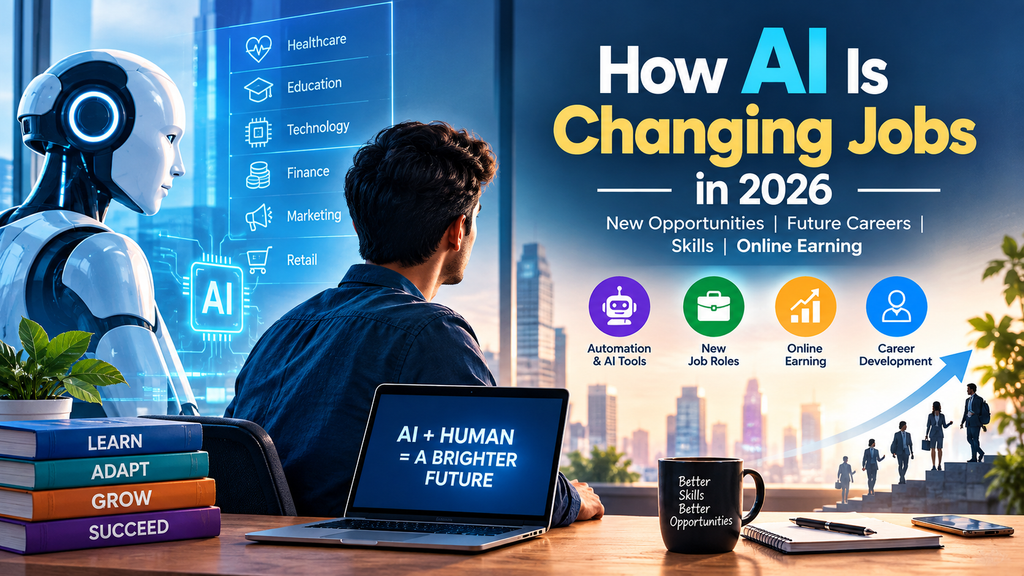
The workplace is evolving rapidly, and one of the biggest reasons behind this transformation is artificial intelligence. From automating repetitive tasks to assisting professionals with complex decision-making, AI has become a powerful force across industries. Businesses, employees, freelancers, and students are all experiencing the impact of this technological revolution.
In 2026, AI is no longer a futuristic concept. It is being used in marketing, healthcare, education, software development, customer support, finance, and many other sectors. As organizations adopt smarter tools, workers are adapting to new ways of performing their jobs and building their careers.
Why AI Is Transforming the Modern Workplace
Companies are embracing AI because it helps improve efficiency, reduce operational costs, and increase productivity. Tasks that previously required hours of manual effort can now be completed in minutes using intelligent software.
Some common workplace applications include:
- Automated customer support through AI chatbots
- Data analysis and reporting
- Content creation and editing
- Predictive analytics for business decisions
- AI-powered recruitment and hiring
- Personalized learning and training systems
These advancements are among the biggest technology trends influencing businesses worldwide.
Jobs Most Affected by AI in 2026
While AI is creating opportunities, it is also changing traditional job roles. Many repetitive and routine-based tasks are becoming automated.
Customer Service
AI assistants can answer common customer questions, reducing the need for large support teams. However, human representatives are still needed for complex issues and relationship management.
Data Entry
Many data entry processes are now automated through intelligent systems that can process information accurately and quickly.
Content Production
AI writing tools help create drafts, summaries, product descriptions, and reports. Human writers remain important for creativity, strategy, fact-checking, and storytelling.
Administrative Roles
Scheduling, document management, and workflow automation tools are reducing manual administrative work.
New Jobs Created by Artificial Intelligence
Although some tasks are being automated, AI is also generating entirely new career opportunities.
AI Specialists
Businesses need experts who can develop, train, and maintain AI systems.
Prompt Engineers
Organizations increasingly hire professionals who know how to interact effectively with AI tools to achieve better results.
AI Content Strategists
Companies require specialists who can combine human creativity with AI-generated content.
AI Ethics Consultants
As AI becomes more powerful, businesses need experts who can ensure responsible and ethical implementation.
Automation Experts
Companies seek professionals who can identify processes that can be improved through automation.
These emerging roles demonstrate how artificial intelligence is creating demand for new skills rather than simply replacing workers.
How AI Is Helping Freelancers and Online Earners
One of the biggest benefits of AI is its impact on online earning opportunities. Freelancers can use AI tools to improve productivity and serve more clients efficiently.
Popular uses include:
- Content writing assistance
- Graphic design support
- Video editing automation
- SEO research
- Social media management
- Virtual assistance
By combining human expertise with AI-powered tools, freelancers can increase output while maintaining quality.
Skills That Will Remain Valuable
Despite rapid automation, several skills continue to be highly valuable because they are difficult for AI to replicate.
Critical Thinking
Businesses need people who can analyze situations and make strategic decisions.
Creativity
Innovation, storytelling, branding, and original ideas remain human strengths.
Emotional Intelligence
Building relationships, understanding emotions, and managing teams require human interaction.
Leadership
Organizations still need leaders who can motivate people and guide long-term growth.
Adaptability
Workers who continuously learn and adapt to new technologies will have a competitive advantage.
These skills are essential for long-term career development in an AI-driven economy.
The Future of Work in 2026 and Beyond
The future of work is not about humans versus machines. Instead, it is about collaboration between people and technology. Employees who learn to use AI effectively will likely outperform those who resist technological change.
Companies are increasingly looking for professionals who understand both their industry and AI tools. This combination of technical knowledge and human expertise will become one of the most valuable assets in the job market.
Educational institutions are also adapting by introducing AI-related courses, helping students prepare for future careers.
How to Prepare for an AI-Driven Career
If you want to stay competitive, consider these steps:
- Learn basic AI concepts.
- Use AI tools in your daily workflow.
- Improve communication and leadership skills.
- Stay updated with emerging technology trends.
- Build expertise in your chosen field.
- Invest in continuous learning and certifications.
The professionals who embrace change today will be better positioned for tomorrow’s opportunities.
Conclusion
As businesses continue to adopt advanced technologies, AI Is Changing Jobs across nearly every industry. While automation may replace certain repetitive tasks, it is also creating exciting new opportunities for innovation, online earning, and career growth. The key to success is developing skills that complement technology rather than compete with it. In the years ahead, professionals who understand how AI Is Changing Jobs and adapt accordingly will be best prepared to thrive in the evolving future of work.