
A federal court is examining Justice Department redactions in Jeffrey Epstein investigative files, raising questions about transparency, accountability, and public access to government records.
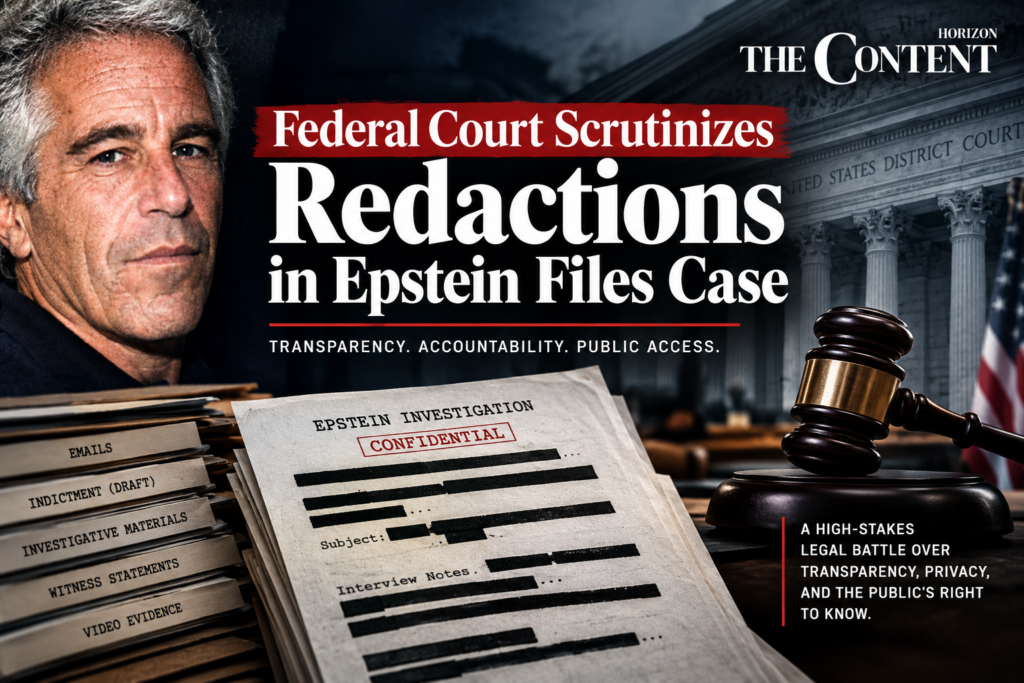
A federal court in the United States has intensified scrutiny of the Justice Department’s handling of records connected to the Jeffrey Epstein investigation, placing renewed attention on transparency, public access to information, and the protection of sensitive material.
The dispute centers on whether certain investigative files related to Epstein were excessively redacted before being released to the public. During recent proceedings, U.S. District Judge Emmet Sullivan directed the Department of Justice (DOJ) to either remove specific redactions from the disputed documents or provide a detailed legal explanation for why the information should remain hidden. The order represents a significant development in an ongoing legal battle over public access to records linked to one of the most closely watched criminal investigations in recent history.
Background of the Legal Challenge
The lawsuit was filed in April 2026 by journalist Katie Phang, who argues that federal authorities have not fully complied with transparency requirements established under the Epstein Files Transparency Act. According to the complaint, numerous documents were released with substantial portions obscured, making it difficult for the public to understand the full scope of the investigation and the decisions made by government agencies.
Supporters of greater disclosure argue that transparency is essential in a case that has generated international attention and widespread public interest. They maintain that the release of investigative records can help improve accountability and public trust in federal institutions.
Documents at the Center of the Dispute
Several categories of records have become the focus of the court’s review. Among them are a series of heavily redacted emails, references to investigative materials, draft legal documents, and supporting notes prepared by federal investigators.
One of the most debated records reportedly includes references to video evidence mentioned during the investigation. Other documents include portions of a draft indictment in which certain names and details remain concealed. Additionally, FBI interview notes containing allegations and witness statements have drawn attention because large sections remain unavailable to public review.
Legal observers note that disputes over redactions often involve balancing competing interests, including transparency, privacy rights, ongoing investigative concerns, and legal protections granted under federal law.
Judge Signals Growing Frustration
During court proceedings, Judge Sullivan reportedly expressed concern about delays in providing clearer explanations for the redactions. The judge emphasized that federal agencies must demonstrate why information is being withheld rather than relying on broad or generalized claims.
Court analysts say the judge’s comments indicate increasing judicial pressure on the Justice Department to justify each contested redaction with greater specificity. The court also suggested that continued delays could result in additional legal consequences if compliance requirements are not met within established deadlines.
The hearing underscored the broader principle that government agencies must be able to explain decisions involving public records, particularly in cases that attract significant national and international interest.
Justice Department Defends Its Approach
The Department of Justice has maintained that its review process is both extensive and necessary. Government attorneys argue that millions of pages of records have been examined to determine what information can be legally released.
According to the department, many redactions are intended to protect the privacy of victims, safeguard personal information, and comply with statutory obligations. Officials have also argued that some materials contain unverified allegations, sensitive investigative details, or information that could unfairly affect individuals who were never charged with crimes.
The DOJ contends that balancing transparency with legal and ethical responsibilities requires a careful document-by-document review process rather than a blanket release of records.
Why the Case Matters
The outcome of the case could influence how federal agencies handle future requests for high-profile investigative records. Transparency advocates believe the court’s decision may establish important standards regarding government accountability and the level of detail agencies must provide when withholding information.
At the same time, privacy experts caution that any disclosure process must carefully consider the rights and safety of victims, witnesses, and other individuals whose information may appear in investigative files.
As the legal proceedings continue, the court’s review is expected to play a key role in determining how much additional information related to the Epstein investigation may become available to the public.
Looking Ahead
The next phase of the case will focus on whether the Justice Department can provide sufficient legal justification for the disputed redactions or whether additional portions of the records will be released. The court’s eventual ruling could shape future transparency disputes involving sensitive government investigations and establish new benchmarks for public access to federal records.
With public interest remaining high, legal experts, journalists, and advocacy groups are expected to closely monitor every development in the case as questions surrounding the Epstein files continue to attract national attention.