
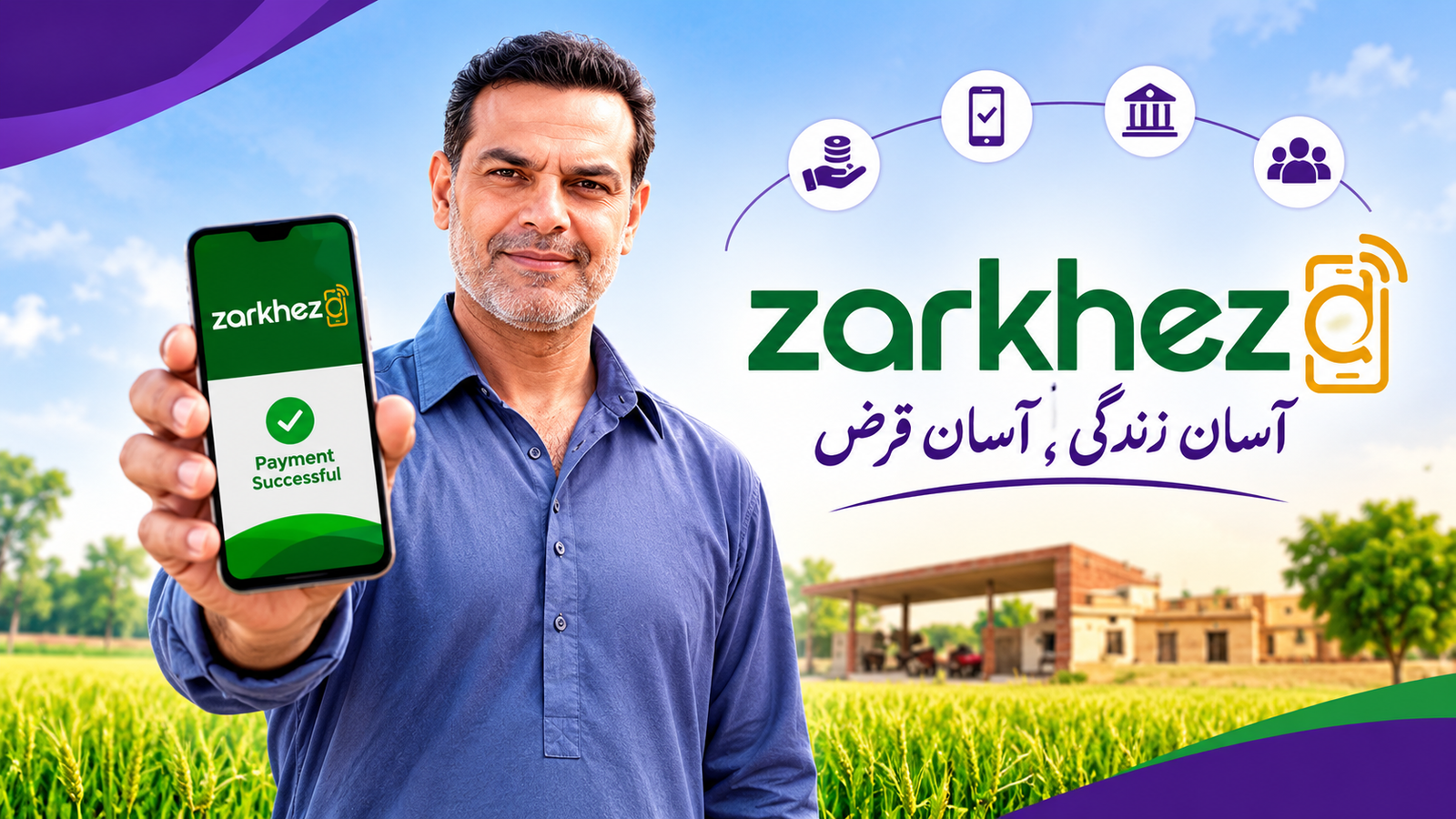
Access to credit has always been one of the biggest hurdles for small farmers in Pakistan. Most smallholders do not have land documents that banks accept as collateral, so they end up depending on informal lenders. The Zarkhez-e Loan Scheme was launched to change this by offering crop loans without collateral, through a fully digital process.
This guide explains what the scheme is, who can apply, how much you can borrow, and where to apply.
What Is the Zarkhez-e Loan Scheme?
Zarkhez-e, branded as “Asaan Digital Zarai Qarza” (Easy Digital Agricultural Loan), is a collateral-free financing initiative for small and marginalised farmers. It was introduced as the National Subsistence Farmers Support Initiative and later renamed Zarkhez-e. The State Bank of Pakistan rolled out the digital platform in October 2025.
The Zarkhez-e Loan Program works through banks and microfinance banks. Farmers apply on a central online portal or mobile application, so there is no need to visit a branch just to submit a request.
Who Can Benefit From It?
The program is aimed at landowners, tenants, and sharecroppers who grow crops on a small scale. It especially targets farmers in unserved and underserved areas who have been outside the formal banking system for years.
Key Features of the Zarkhez-e Loan Scheme
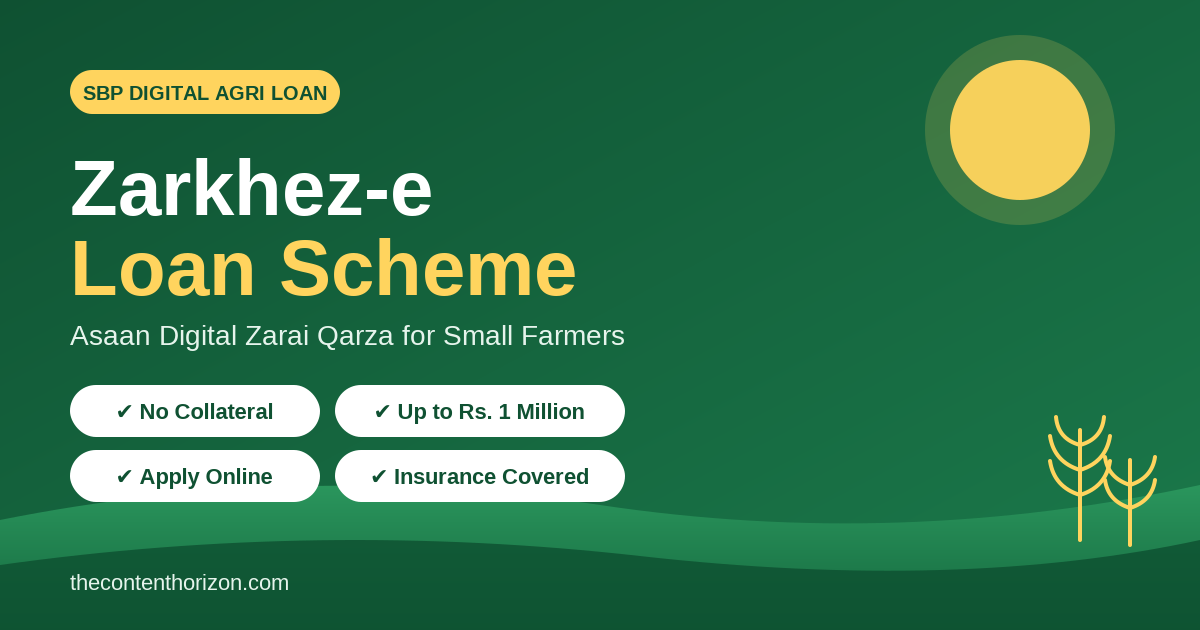
No Collateral Required
The main attraction is that farmers do not need to pledge land or property. Banks make decisions based on the farmer’s profile and farming activity rather than on what they own.
Loan Limit and Duration
Landowners can borrow up to Rs100,000 per acre, with a maximum of Rs1 million. The financing is short-term, designed for one crop cycle of about one year.
In-Kind Disbursement
A large part of the loan, at least 75 percent, is given in kind rather than as cash. This means the money is used to buy seeds, fertilisers, pesticides, and diesel from authorised centres approved by the banks. The idea is to make sure the loan actually goes into farming inputs and improves crop quality.
Insurance Coverage
Every borrower gets life insurance equal to the loan amount disbursed and outstanding. If the borrower passes away, the remaining loan is recovered through the insurance claim instead of being passed on to the family. Crop loan insurance is also mandatory for five major crops, which protects against weather-related losses.
Government Risk Support
To encourage banks to lend to smallholders, the government provides a 10 percent first-loss guarantee. There is also an operational cost subsidy for lenders under the scheme.
Agronomy Advice
Along with financing, the program offers agronomy-related advisory services, so farmers can get guidance on better farming practices.
How to Apply for the Zarkhez-e Loan Program
The application process is fully digital. Farmers can apply through the official Zarkhez-e portal, which is the only place to register for the scheme. The general steps are:
- Visit the official portal and click the sign-up button.
- Read the eligibility criteria carefully and confirm that you qualify.
- Enter your registration details.
- Accept the terms and conditions, including the personal guarantee.
- Click register to create your account, then submit your loan request.
Farmers can also use the Zarkhez-e mobile app, which lets them apply from home. Several banks, including Bank Al Habib, have listed the scheme on their own websites, so you can also check with your nearest participating bank or microfinance bank.
Tips Before You Apply
- Keep your CNIC and land or tenancy details ready.
- Read the term sheet and repayment schedule properly before accepting.
- Remember that eligibility does not automatically mean approval, because the final lending decision stays with the bank.
- Use only the official portal or your bank’s verified channels, and never pay anyone to “arrange” a loan for you.
Why This Scheme Matters
Agriculture supports a huge share of rural livelihoods in Pakistan, yet small farmers often get lower yields because they cannot afford quality inputs on time. By linking credit to seeds, fertiliser, and diesel, the Zarkhez-e Loan Scheme tries to improve productivity directly. The digital process also reduces paperwork, travel, and dependence on middlemen.
For banks, the insurance cover and the government guarantee reduce risk, which is what makes lending without collateral possible.
Challenges and Criticism
Like any large program, Zarkhez-e has also drawn debate. Some bankers have questioned whether a 10 percent guarantee is enough in a country where loan recovery is difficult. There are also concerns that agricultural credit has historically faced political pressure. The Pakistan Banks Association has responded that the scheme is commercially structured, that banks keep full control over lending decisions, and that borrower eligibility is not an automatic entitlement.
How well the scheme performs will depend on careful lending, fair recovery, and proper monitoring over the next few seasons.
Final Thoughts
The Zarkhez-e Loan Scheme is one of the more practical attempts to bring small farmers into the formal financial system. Collateral-free lending, in-kind inputs, built-in insurance, and a digital application can make borrowing easier and safer. If you are interested, start on the official application portal, compare participating banks, and borrow only what you can repay comfortably after harvest.
For more simple, practical guides like this, keep reading The Content Horizon.


Leave a Reply