Artificial intelligence has made it easier for beginners to create digital products without advanced design or technical skills. From ebooks and printable planners to templates and digital artwork, AI tools can help you develop products that customers can purchase and download online.
If you want to learn how to sell AI-generated digital products online, this guide explains how to choose a product, create it with AI, select a selling platform, and market it to potential customers.
What Are AI-Generated Digital Products?
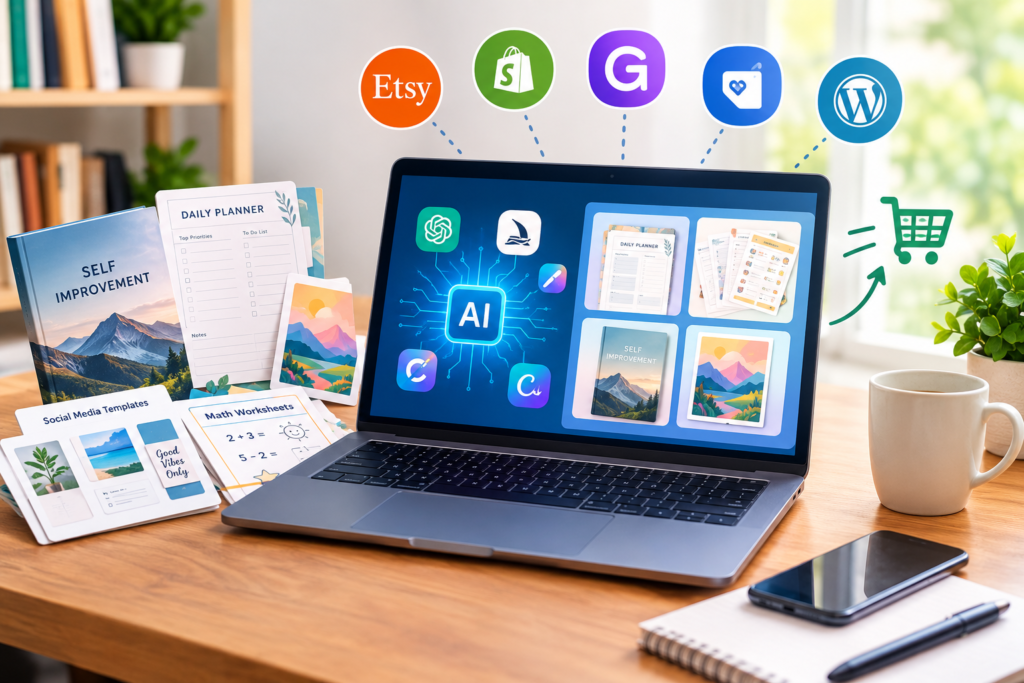
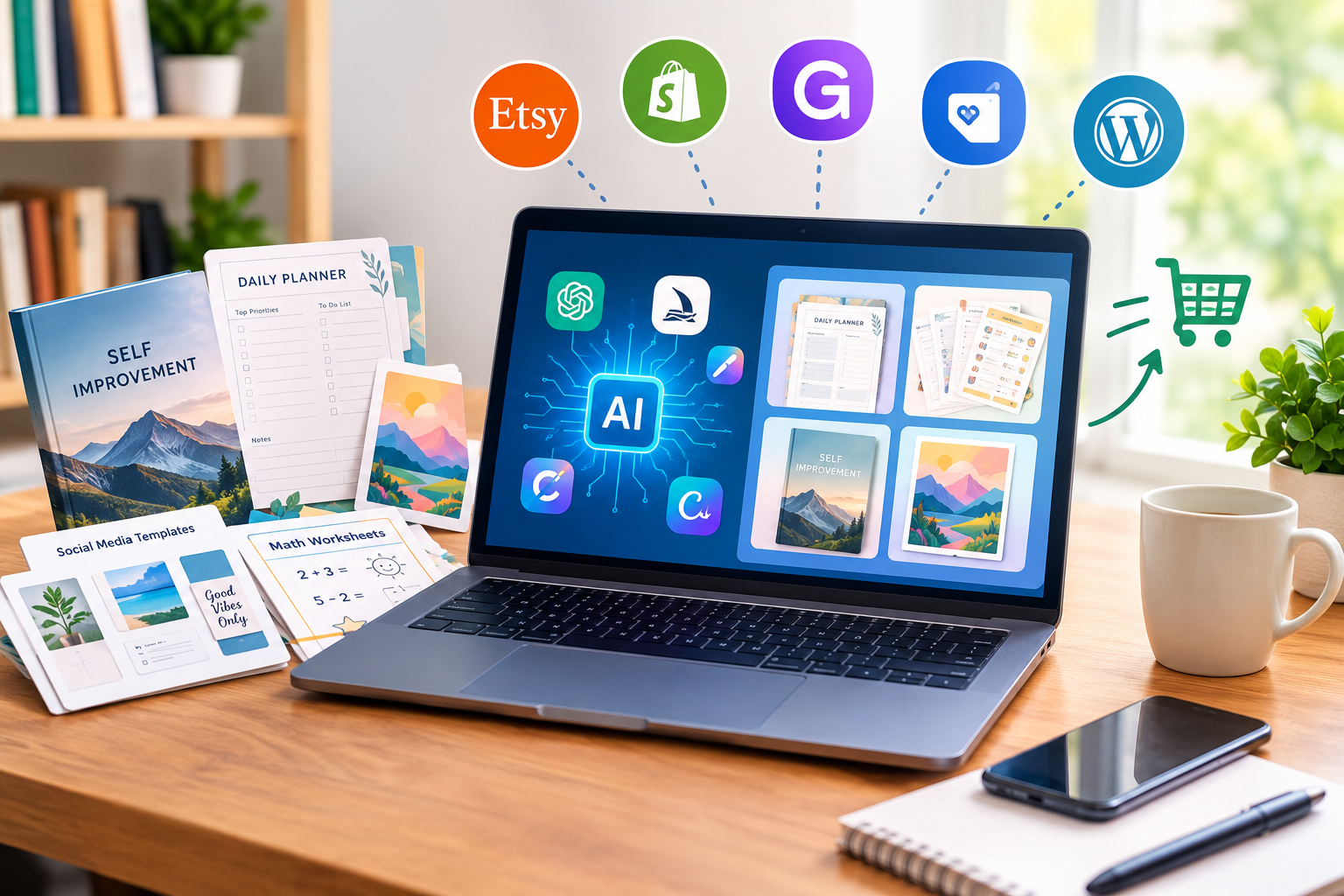
AI-generated digital products are downloadable files or digital resources created with the help of artificial intelligence tools. You can sell these products online without managing physical inventory, packaging, or shipping.
Examples include ebooks, planners, educational worksheets, social media templates, digital illustrations, and business documents.
AI can help with research, writing, design, and idea generation. However, reviewing and improving the final product is important to make it useful, original, and valuable to customers.
10 AI-Generated Digital Products You Can Sell Online
Here are ten product ideas to consider when starting your digital product business.
1. AI-Generated Ebooks
Use AI tools to brainstorm topics, organize chapters, and prepare a first draft. You can create ebooks about productivity, personal development, beginner tutorials, or other subjects you understand.
Edit the content carefully, verify facts, and add your own insights before selling it.
2. Printable Planners and Journals
Create digital planners for daily tasks, study schedules, budgeting, fitness goals, or habit tracking. Design tools can help you produce printable PDF files customers can use at home.
3. Social Media Templates
Businesses and content creators need social media graphics regularly. You can create editable post templates, Instagram story layouts, Pinterest pins, and content calendars.
4. Resume and Cover Letter Templates
Create professional resume layouts, cover letter formats, and job application trackers. Make sure the templates are easy to edit and include clear instructions.
5. AI-Generated Digital Art
Create original illustrations, backgrounds, wall art, and decorative prints with AI image-generation tools. Check the tool’s commercial-use terms and the selling platform’s rules before listing your artwork.
6. Educational Worksheets
Develop vocabulary exercises, revision sheets, activity pages, and study planners. Review every answer for accuracy and adapt the material to the intended age group.
7. Website and Blog Templates
Create blog post outlines, website content templates, editorial calendars, and downloadable website planning documents for bloggers and small businesses.
8. Business Document Templates
Sell invoice templates, project trackers, meeting agendas, client onboarding forms, and business planning worksheets. These products can help customers organize everyday tasks.
9. Digital Stickers and Clipart
Design themed digital stickers, icons, decorative elements, and clipart bundles for compatible digital planning and design applications.
10. Prompt Packs for AI Tools
Organize useful prompts for specific tasks, such as content planning, product descriptions, marketing campaigns, or brainstorming. Include examples and instructions rather than simply selling a list of generic prompts.
Best AI Tools for Creating Digital Products
Different tools serve different purposes. Start with a small selection rather than paying for several subscriptions immediately.
| Tool | How you can use it |
|---|---|
| ChatGPT | Brainstorming, outlining, drafting, and editing content |
| Canva | Designing planners, presentations, worksheets, and templates |
| Adobe Firefly | Creating and editing visual assets |
| Google Docs | Writing and formatting ebooks and guides |
| Google Sheets | Creating trackers, planners, and calculators |
Features and commercial-use rights may vary by tool, plan, and the type of content you generate. Check the applicable terms before selling your products.
How to Sell AI-Generated Digital Products Online: Step-by-Step
Step 1: Choose a Specific Niche
Avoid creating products for everyone. Focus on a particular audience and problem.
For example:
- Students who need study planners
- Small businesses that need social media templates
- Job seekers who need resume templates
- Bloggers who need content planning resources
- Freelancers who need client management documents
A specific audience makes it easier to develop a relevant product and communicate its value.
Step 2: Research Customer Demand
Before creating a product, investigate whether people are already searching for similar solutions.
You can explore Google Search, Google Trends, marketplace search suggestions, and competitor listings. Look at customer reviews to identify missing features, common complaints, and opportunities to improve existing products.
Do not rely only on the number of competing products. Evaluate whether customers have a real need for your proposed solution.
Step 3: Create Your Product With AI
Use AI to generate ideas, plan the structure, or produce a starting draft. Then customize the output for your target audience.
For example, if you are creating a student planner:
- Ask an AI tool to suggest useful planner sections.
- Organize the sections into a practical layout.
- Design the pages using Canva or another suitable editor.
- Check spelling, usability, and print dimensions.
- Export the finished product in an appropriate format, such as PDF.
Your goal should be a finished product that solves a problem, not merely a file generated by AI.
Step 4: Check Quality and Usage Rights
Before publishing, review the content for errors, misleading information, copied material, and design problems.
Also check whether your AI tool permits commercial use of the generated content. Avoid using protected logos, copyrighted characters, trademarked designs, or other material without appropriate authorization.
Remember that permission to use an AI tool commercially does not automatically guarantee that every generated output is copyright-protected or free from third-party rights issues.
Step 5: Choose a Selling Platform
You can sell digital products through marketplaces or your own website. The best option depends on your target audience, fees, payment options, and location.
Etsy: Can be suitable for printable planners, templates, and digital artwork, subject to its current seller and AI disclosure policies.
Gumroad: Offers a way to sell downloadable products directly to customers. Check supported payout methods and eligibility for your country.
Payhip: Supports digital downloads and storefronts. Confirm payment gateway availability and fees before setting up your shop.
Your own website: A WordPress website with a suitable ecommerce plugin can give you more control over branding, content, and customer relationships. However, you must arrange payments, security, and marketing yourself.
If you are selling from Pakistan, verify that the platform accepts sellers from Pakistan and offers a workable payout method before investing time in creating a store. Platform eligibility and payment rules can change.
Step 6: Create a Professional Product Listing
A strong listing helps customers understand what they will receive.
Include:
- A clear product title
- A detailed description of the problem it solves
- Preview images or mockups
- The exact file formats included
- Instructions for downloading and using the product
- Any relevant usage or license restrictions
Use relevant keywords naturally in the title, description, and tags. Avoid exaggerated claims or misleading previews.
Step 7: Set a Reasonable Price
Research comparable products and consider the quality, usefulness, uniqueness, and time saved by your product.
For example, you might test a simple printable planner at $3–$5 or a larger template bundle at $10–$20. These are illustrative starting prices, not verified market averages or guaranteed profitable price points.
Remember to account for platform fees, payment processing, taxes where applicable, refunds, and marketing expenses.
Step 8: Promote Your Digital Products
You do not have to rely entirely on marketplace traffic. You can promote products through:
- Pinterest pins that link to your product page
- Instagram and Facebook content
- Helpful blog posts targeting relevant search terms
- Email newsletters
- Short product demonstrations
- Partnerships with relevant creators
For example, if you sell a study planner, publish a helpful article about organizing a study schedule and link to your planner where it naturally helps readers.
Step 9: Improve Your Product Based on Feedback
Track product views, clicks, sales, refunds, and customer feedback where these metrics are available.
If people view your listing but do not purchase, improve the preview images, description, pricing, or perceived value. If customers buy the product but report usability problems, improve the files and instructions.
Use customer feedback to develop better versions and related products.
Can You Sell AI-Generated Digital Products From Pakistan?
Potentially, yes, but your options depend on the platform and its current country-specific requirements.
Before opening a store, check:
- Whether sellers based in Pakistan are eligible.
- Which identity and business documents are required.
- Which payout methods are supported.
- Whether the platform permits your chosen type of AI-generated content.
- What fees, tax obligations, and seller policies apply.
Do not assume that a platform supports Pakistani sellers simply because customers in Pakistan can visit its website.
If a marketplace is unavailable to you, consider a suitable alternative that supports your country, or explore selling through your own website with a compatible payment provider.
Common Mistakes to Avoid
Publishing unedited AI content: Generic or inaccurate products may disappoint customers. Review every file before listing it.
Copying competitors: Use competitor listings for research, not as material to duplicate.
Ignoring platform policies: AI disclosure, intellectual property, and seller eligibility requirements differ across platforms.
Creating too many products too quickly: Start with one useful product and improve it using customer feedback.
Expecting instant income: Sales depend on product quality, demand, pricing, visibility, and marketing. There is no guaranteed income.
Ignoring customer experience: Provide clear previews, accurate descriptions, easy-to-use files, and helpful instructions.
Frequently Asked Questions
Is it legal to sell AI-generated digital products?
It can be legal, but the answer depends on the content, applicable laws, tool terms, and selling platform rules. Avoid unauthorized use of protected material and check the relevant commercial-use terms.
Can beginners sell digital products made with AI?
Yes. Beginners can start with relatively simple products, such as printable planners, worksheets, and templates. Basic editing, design, research, and quality-control skills remain important.
Do I need to pay for AI tools?
Not necessarily. Some tools offer free plans or free features. Check their current limits and commercial-use terms before choosing one.
Which AI-generated digital products are easiest to start with?
Simple planners, checklists, worksheets, and editable templates can be manageable starting points. The best choice is a product you can create well for an audience with a clear need.
Can I make passive income from AI-generated digital products?
Digital downloads can be sold repeatedly without producing a new physical item for each order. However, research, promotion, customer support, updates, and business expenses still require effort. Income is not guaranteed.
Final Thoughts
Learning how to sell AI-generated digital products online starts with choosing a specific audience, identifying a genuine need, and creating a useful product with the help of AI tools.
Start small, check commercial-use rights, choose a platform that supports your country, and improve your product based on real customer feedback. Instead of publishing dozens of generic downloads, focus on creating a few high-quality products that solve specific problems.
With consistent research and marketing, an AI-assisted digital product business can become a useful online business experiment.