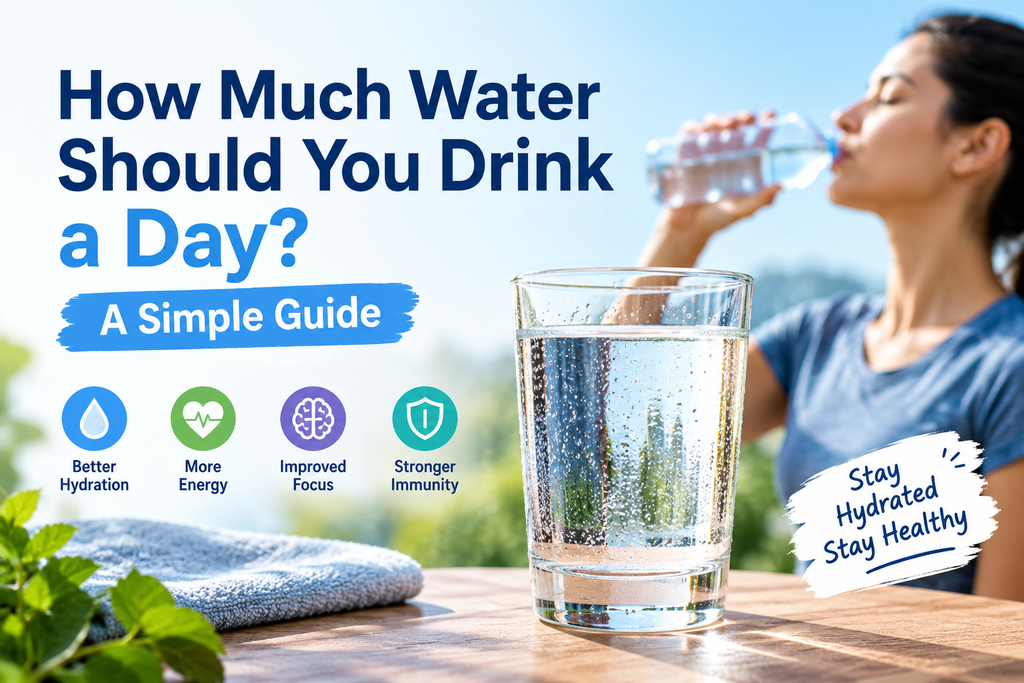
How Much Water Should You Drink a Day? A Simple Guide
How much water should you drink a day? Learn the daily amount for men, women, and different lifestyles, plus signs of dehydration and easy ways to drink more.
You’ve probably heard that you should drink eight glasses of water a day. But is that true for everyone? What if you’re active, live in a hot place, or hardly ever feel thirsty?
The honest answer is that there’s no single number that fits everybody. This guide explains how much water you should drink a day, what changes the amount, how to tell if you’re drinking enough, and simple ways to stay hydrated.
The Short Answer
A commonly cited guideline from the U.S. National Academies of Sciences, Engineering, and Medicine suggests a total daily fluid intake of about:
- 3.7 liters (around 15 cups) for men
- 2.7 liters (around 11 cups) for women
This number covers all fluids and food together. About 20% of your daily water typically comes from food, such as fruit, vegetables, soup, and rice. That means most women need roughly 9 cups, and most men roughly 13 cups, from drinks.
Treat these numbers as a starting point, not a strict rule. Your own needs can be higher or lower.
Is the “8 Glasses a Day” Rule Correct?
Eight glasses (about 2 liters) isn’t a bad estimate, and it falls near what many adults need. But it isn’t a scientific law. It’s a simple, easy-to-remember guideline. Your ideal amount depends on your body size, activity, climate, and health.
Why Your Body Needs Water
Water is involved in nearly everything your body does. It helps:
- Regulate body temperature through sweating
- Carry nutrients and oxygen around the body
- Support digestion and prevent constipation
- Cushion your joints and protect tissues
- Flush waste through urine
- Keep your skin, mouth, and eyes moist
Even mild dehydration can leave you feeling tired and less able to concentrate.
What Changes How Much Water You Need?
Body size
Larger people generally need more fluid than smaller people.
Physical activity
When you exercise, you lose water through sweat. Drink more before, during, and after workouts, especially if they last more than an hour or you sweat heavily.
Hot weather and humidity
Heat makes you sweat more. In hot climates or during summer, you’ll need extra fluids, even if you aren’t exercising.
High altitude
Higher altitudes can increase fluid loss through faster breathing and more urination.
Illness
Fever, vomiting, and diarrhea cause rapid fluid loss. Sip fluids often, and see a doctor if you can’t keep liquids down.
Pregnancy and breastfeeding
Needs go up. The same national guidance suggests about 3.0 liters of total fluids a day during pregnancy and about 3.8 liters while breastfeeding. Ask your doctor for advice tailored to you.
Your diet
If you eat lots of fruits, vegetables, and soups, you’ll get more water from food. A diet high in salt, or high in dry, processed foods, may leave you needing more.
Age
Older adults often feel less thirsty even when their bodies need fluids, so they should sip regularly through the day.

How to Tell If You’re Drinking Enough
You don’t need to measure everything. Your body gives clear signals.
Check your urine color.
- Pale yellow, like light lemonade: usually a good sign
- Dark yellow or amber: you may need more fluids
- Completely clear all day: you might be drinking more than you need
Notice thirst. For most healthy adults, thirst is a reliable sign to drink.
Watch for other clues: how often you urinate, how your mouth feels, and your energy level.
Signs of Dehydration
Mild to moderate dehydration can cause:
- Thirst and a dry mouth
- Dark, strong-smelling urine, or passing urine less often
- Headache
- Tiredness or dizziness
- Dry lips and skin
- Trouble concentrating
- Muscle cramps
Get medical help quickly if you have severe symptoms, such as extreme weakness, confusion, a very fast heartbeat, fainting, or no urine for many hours. Infants, young children, and older adults can become dehydrated faster and need extra care.
Can You Drink Too Much Water?
Yes, though it’s uncommon. Drinking a very large amount in a short time can lower the sodium level in your blood, a condition called hyponatremia. It can cause nausea, headache, confusion, and in serious cases seizures. It’s most often a concern for endurance athletes and people with certain medical conditions.
For most healthy people, drinking according to thirst and urine color is safe. Don’t force down large amounts of water.
Does Tea, Coffee, and Other Drinks Count?
Yes. Most drinks contribute to your daily fluid intake, including:
- Water (the best everyday choice)
- Tea and coffee (in moderate amounts)
- Milk
- Soups and broths
- Fruit and vegetable juices (watch the sugar)
- Foods with high water content, like cucumber, watermelon, oranges, and tomatoes
Sugary drinks, energy drinks, and soda add extra sugar and calories, so water is usually the better main choice. If you notice too much caffeine makes you jittery, our guide on how to reduce stress and anxiety naturally covers that.
Easy Ways to Drink More Water
If you often forget to drink, try these habits:
- Start your day with a glass of water. It also fits well into a simple morning routine for a productive day.
- Carry a reusable bottle and refill it through the day.
- Link water to habits, such as a glass with each meal or after every bathroom break.
- Set reminders on your phone or use a hydration app.
- Add flavor naturally with lemon, mint, cucumber, or a few berries if plain water bores you.
- Eat water-rich foods such as fruit, salad, and soups.
- Keep water visible. A glass on your desk is a constant reminder.
- Drink a glass before meals.
- Choose water when you eat out instead of a sugary drink.
Staying Hydrated in Hot Weather
If you live in a hot climate, such as South Asia in summer:
- Drink regularly through the day, not only when you feel very thirsty
- Avoid being in direct sun for long periods during the hottest hours
- Wear light clothing and a hat outside
- Replace salts and fluids if you sweat heavily, for example with oral rehydration solution or salted drinks like lassi or lemon water with a pinch of salt
- Take extra care with children and older adults
Staying Hydrated While Fasting
If you fast, for example during Ramadan, you can’t drink during fasting hours, so spread your fluids between breaking your fast and the pre-dawn meal. Sip water steadily instead of drinking a lot at once. Include water-rich foods and limit very salty, fried, and sugary foods, which can make you thirstier. If you have a medical condition, talk to your doctor about fasting safely.
Who Should Ask a Doctor First?
Some people have been told to limit fluids, or may need different amounts. Check with a doctor if you have:
- Kidney disease
- Heart failure
- Liver disease
- A condition that affects how your body handles fluids
- A prescription that affects hydration, such as some diuretics
Follow the advice of your healthcare provider if it differs from general guidelines.
Common Water Myths
Myth: You must drink exactly 8 glasses.
It’s a rough guide, not a rule. Your needs vary.
Myth: Coffee and tea dehydrate you.
In moderate amounts, they still count toward your fluid intake.
Myth: Clear urine always means you’re healthy.
Pale yellow is a good target. Persistently clear urine can mean you’re overdoing it.
Myth: If you’re thirsty, you’re already seriously dehydrated.
Thirst is a normal signal to drink. It doesn’t necessarily mean you’re in trouble.
Myth: Water alone will cause weight loss.
Water can help you feel full and replace sugary drinks, but it isn’t a weight-loss solution on its own.
Frequently Asked Questions
How much water should you drink a day?
A common guideline for total daily fluids, including food, is about 3.7 liters for men and 2.7 liters for women. Your own needs depend on your size, activity, climate, and health.
Is 2 liters of water a day enough?
For many healthy adults, around 2 liters of drinks is a reasonable amount, but it may be too little if you’re active, in hot weather, or have a larger body. Check your thirst and urine color.
How many glasses of water should I drink a day?
Roughly 8 to 13 cups of total fluids, depending on the person, with some coming from food. Use this as a guide, not a strict target.
How much water should you drink when exercising?
Drink water before, during, and after exercise. For longer or very sweaty sessions, you may also need electrolytes. Sip steadily and don’t force large amounts.
What are the signs I’m not drinking enough water?
Common signs include thirst, dark urine, headache, tiredness, dry mouth, and dizziness.
Is it okay to drink water with meals?
Yes. Drinking water with meals is generally fine and can help with digestion.
Does drinking water help with skin?
Staying hydrated supports overall skin health, but water alone can’t fix skin conditions. Sleep, diet, and skincare matter too.
Can you drink too much water?
Yes, although it’s rare. Very large amounts in a short time can cause dangerously low blood sodium. Drink according to thirst and spread your fluids across the day.