
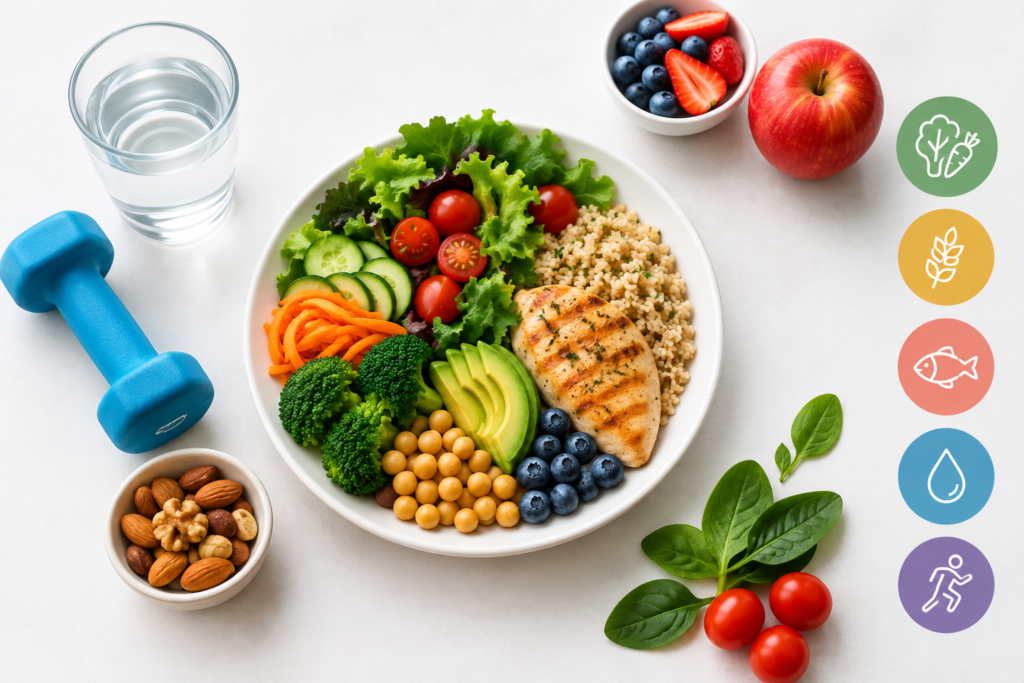
A healthy diet is an important part of maintaining overall well-being. The food we eat provides the energy and nutrients our body needs for daily activities. However, creating a balanced eating routine does not have to be complicated. A simple healthy diet plan can include a variety of fruits, vegetables, whole grains, protein-rich foods, and healthy fats.
Whether you want to improve your eating habits, maintain a healthy weight, or simply make better food choices, understanding the basics of balanced nutrition can help you build sustainable habits.
What Is a Healthy Diet Plan?
A healthy diet plan is an eating routine that provides a variety of essential nutrients through different types of foods. Instead of focusing on one particular food or avoiding entire food groups without a medical reason, a balanced approach includes different foods in appropriate portions.
A healthy eating pattern commonly includes:
- Fruits and vegetables
- Whole grains
- Protein-rich foods
- Healthy fats
- Dairy or suitable alternatives
- Plenty of water
The exact amount of each food group can vary depending on factors such as age, activity level, personal preferences, and individual nutritional needs.
Essential Foods for a Balanced Diet
1. Fruits and Vegetables
Fruits and vegetables are important parts of a balanced diet. They provide vitamins, minerals, fiber, and other nutrients.
Try adding different colors and varieties to your meals. Apples, bananas, oranges, berries, spinach, carrots, tomatoes, cucumbers, and leafy greens are some simple options.
Fresh, frozen, and appropriately prepared vegetables can all be useful choices.
2. Whole Grains
Whole grains can provide carbohydrates, fiber, vitamins, and minerals. They can also be a useful source of energy throughout the day.
Examples include:
- Oats
- Brown rice
- Whole-grain bread
- Whole-wheat roti
- Barley
- Whole-grain cereals
Replacing some refined grains with whole grains can be a simple way to improve the nutritional quality of meals.
3. Protein-Rich Foods
Protein is an important nutrient that supports many functions in the body. Good sources include both animal and plant-based foods.
Some protein-rich options are:
- Eggs
- Fish
- Chicken
- Beans
- Lentils
- Chickpeas
- Yogurt
- Nuts and seeds
For a balanced eating routine, try to include a suitable protein source with your main meals.
4. Healthy Fats
Not all fats have the same nutritional profile. Unsaturated fats are found in foods such as nuts, seeds, avocados, and certain vegetable oils.
Healthy fats can be included in moderate amounts as part of a balanced diet. Portion size still matters because fats are energy-dense.
5. Dairy and Alternatives
Milk, yogurt, and other dairy foods can provide nutrients such as protein and calcium. People who do not consume dairy can choose suitable fortified alternatives depending on their dietary needs and preferences.
Choose options that fit your overall eating pattern and nutritional requirements.

Why Is a Balanced Diet Important?
A balanced diet helps provide the nutrients and energy needed for everyday life. Eating a variety of foods can also make meals more enjoyable and help prevent your diet from becoming overly restrictive.
A nutritious eating pattern can include:
- A variety of fruits and vegetables
- Adequate protein
- Whole grains and other nutrient-rich carbohydrates
- Healthy sources of fat
- Appropriate portions
- Enough fluids
The goal is not to make every meal perfect. Instead, focus on creating healthy habits that you can maintain over time.
Simple Healthy Diet Plan for a Day
Here is an example of how a balanced day of meals could look:
| Meal | Example Foods |
|---|---|
| Breakfast | Oatmeal with fruit and yogurt |
| Mid-Morning Snack | Apple or other fruit with a small serving of nuts |
| Lunch | Whole-wheat roti, vegetables, lentils or chicken, and salad |
| Evening Snack | Yogurt or fruit |
| Dinner | Fish, chicken, beans, or lentils with vegetables and brown rice or whole grains |
| Drinks | Water throughout the day |
This is only a general example, not a personalized diet prescription. Individual nutritional needs can vary.
Tips for Following a Healthy Diet Plan
Building healthy eating habits is easier when you make small, realistic changes.
Plan Your Meals
Planning meals in advance can make it easier to choose nutritious foods instead of relying on convenient options at the last minute.
Add More Vegetables
Try adding vegetables to lunch and dinner. You can include them in salads, soups, curries, sandwiches, or cooked meals.
Choose Whole Foods More Often
Foods such as fruits, vegetables, whole grains, beans, lentils, eggs, fish, and nuts can form the foundation of a nutritious eating pattern.
Drink Enough Water
Water is essential for the body. Keeping water available throughout the day can help you stay hydrated.
Watch Portion Sizes
Even nutritious foods can contribute significant calories when eaten in very large portions. Pay attention to hunger, fullness, and appropriate serving sizes.
Limit Highly Processed Foods
Foods high in added sugars, sodium, or saturated fats can be included occasionally, but making nutrient-rich foods the foundation of your diet can support a more balanced eating pattern.
Healthy Diet Plan for Different Lifestyles
A healthy eating pattern does not have to look exactly the same for everyone.
For example, someone who exercises regularly may have different energy and protein needs from someone with a mostly sedentary routine. Vegetarians can obtain protein from foods such as lentils, beans, chickpeas, tofu, nuts, seeds, and dairy products if included in their diet.
The important point is to build meals around a variety of nutrient-rich foods while considering your individual needs and preferences.
Common Mistakes to Avoid
Some people make healthy eating unnecessarily difficult by following extreme restrictions or focusing on a single food.
Common mistakes include:
- Skipping meals regularly
- Following highly restrictive diets without professional guidance
- Eliminating entire food groups unnecessarily
- Relying heavily on processed foods
- Drinking too many sugary beverages
- Expecting instant results
- Ignoring portion sizes
A sustainable approach usually focuses on consistency rather than perfection.
Frequently Asked Questions
What should a healthy diet include?
A balanced diet can include fruits, vegetables, whole grains, protein-rich foods, healthy fats, and suitable dairy or alternatives. Water is also an important part of a healthy eating routine.
Can I follow a healthy diet on a budget?
Yes. Affordable foods such as seasonal vegetables, lentils, beans, chickpeas, eggs, oats, and whole grains can be part of a nutritious diet.
Is a healthy diet only for weight loss?
No. Healthy eating is not only about weight loss. A balanced diet can help provide the nutrients and energy needed for everyday activities and overall well-being.
How can I start eating healthier?
Start with small changes. Add more vegetables and fruits, choose whole grains more often, include protein-rich foods, drink water regularly, and reduce your reliance on highly processed foods.
Final Thoughts
Creating a healthy diet plan does not require complicated recipes or extreme restrictions. The key is to eat a variety of nutrient-rich foods, maintain reasonable portions, stay hydrated, and develop habits that fit your lifestyle. By making small and consistent improvements to your daily meals, you can create a balanced approach to eating that is easier to maintain over time.